Beyond Textbooks: Real-Life Skills Every CA Student Must Learn
Many commerce students see Chartered Accountancy as a promising career. The course teaches accounting, taxation, law, and auditing, and demands discipline and steady effort.
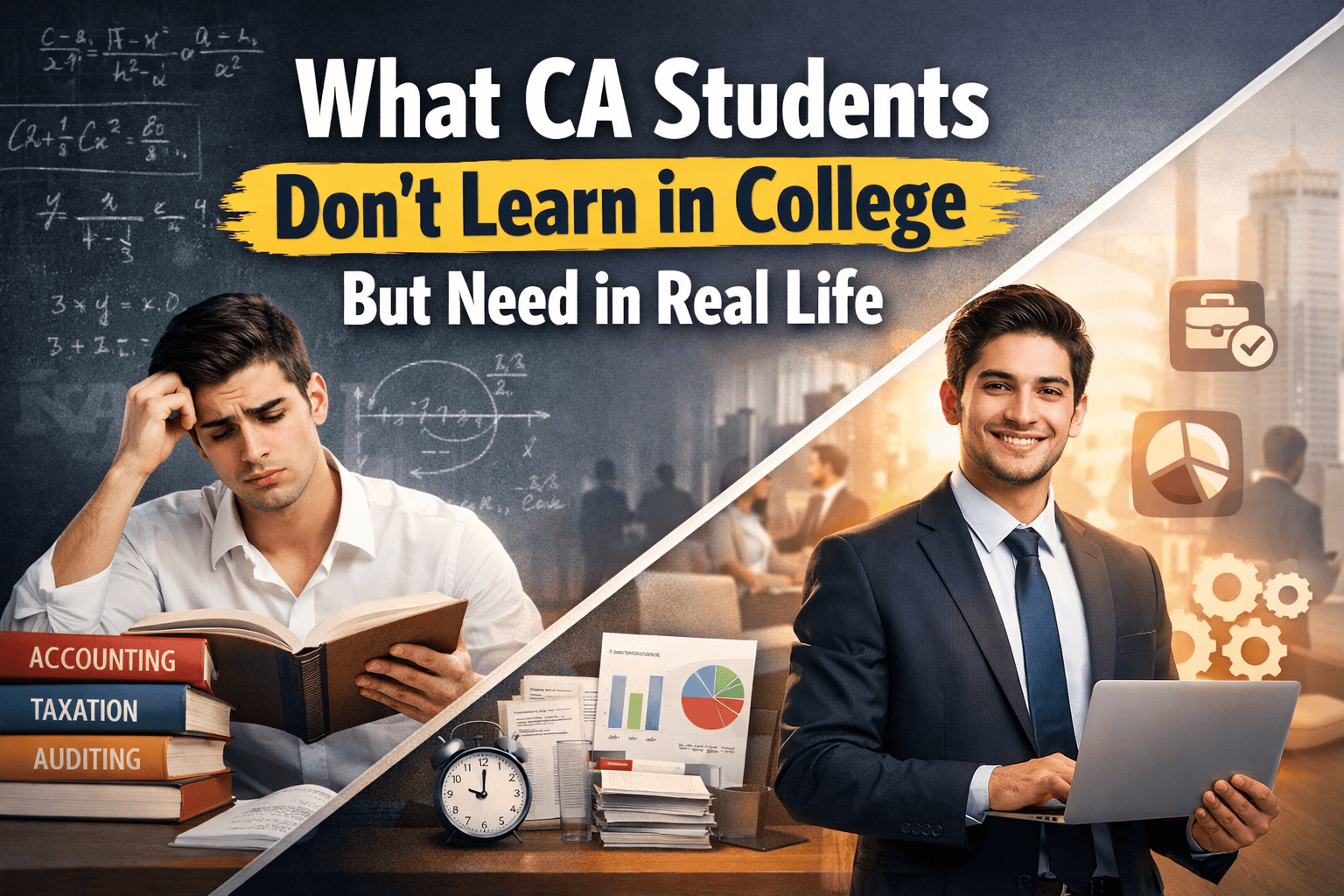
Yet when students start their Articleship or first job, they often notice something missing. Certain skills needed to succeed in the workplace aren’t covered in college or books.
The Gap Between Theory and Practice
College focuses on concepts and exams. Students learn to solve set problems and write structured answers.
But real work doesn’t come with straightforward questions and clear solutions. Each business situation is different, and professionals must apply their knowledge in practical ways. This shift from theory to doing is where many students struggle at first.
The Importance of Communication Skills
Knowing your subject isn’t enough in the professional world. You need to communicate clearly with clients, colleagues, and supervisors.
Explaining financial info simply and confidently is crucial. Better communication builds trust and stronger professional ties, helping your career grow.
Understanding Real-Time Time Management
Managing time during exams is quite different from time management at work. In a job, students juggle multiple responsibilities simultaneously.
They must meet deadlines, handle client demands, and deal with unexpected tasks. Learning to prioritize and stay consistent is key to staying efficient and productive.
Handling Pressure and Responsibility
Work brings real responsibilities. During Articleship or a job, your tasks can directly affect businesses.
This creates pressure, especially during busy times like audits or tax filings. Developing the ability to stay calm, focused, and responsible under pressure takes time but is essential.
Practical Exposure to Work
Textbooks explain concepts, but real work means applying them with tools, software, and actual financial data.
Students learn to prepare reports, manage documents, and work with real business info. This hands-on experience builds confidence and deepens understanding.
Professional Behavior and Work Culture
College mostly cares about grades and performance. In the workplace, behavior and attitude matter just as much.
Being punctual, disciplined, responsible, and respectful all contribute to professional growth. These habits help build a good reputation over time.
Developing Decision-Making Ability
Exam questions are designed and predictable. Real life is uncertain and calls for independent thinking.
Students need to analyze problems, weigh risks, and make informed choices. This skill grows slowly with experience and guidance.
The Role of Guidance and Mentorship
Since many of these skills aren’t taught in class, having a mentor is very helpful. Good guidance helps students adjust better to workplace demands.
At Tharun’s Brainery, the aim is not just academic prep but also building practical skills and confidence. This approach helps students move smoothly from learner to professional.
Conclusion
Becoming a Chartered Accountant isn’t just about passing exams. It’s about developing the skills to handle real challenges.
Academic knowledge is the foundation, but success depends on communication, discipline, practical know-how, and adaptability.
Students who work on both knowledge and real-world skills tend to move ahead. The sooner these skills develop, the stronger the base for a good career.